>

Martyred for the Gospel

Martyred for the Gospel
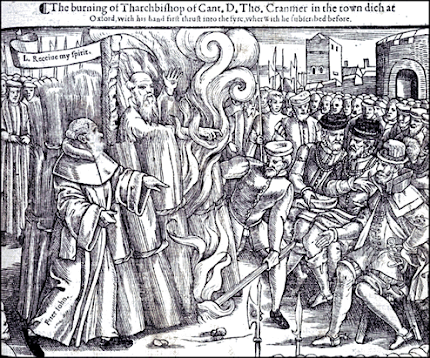
The burning of Tharchbishop of Cant. D. Tho. Cranmer in the town dich at Oxford, with his hand first thrust into the fyre, wherwith he subscribed before. [Click on the picture to see Cranmer's last words.]

Daily Bible Verse

Sunday, July 31, 2011

BibleWorks 9

BibleWorks 9 has just been released and I have just received my copy in the mail yesterday.  I have installed the program and will be writing a series of evaluations of the Bible software in the coming weeks.  Please be patient since I am working a full time secular job in addition to writing this blog.

In brief, however, there are at least two noticeable improvements to BibleWorks 9 over version 8.  First of all, there is a new Bible atlas included, a feature I have longed to see added.  I used to own Logos Bible Atlas in my earlier versions of Logos Bible.  However, Logos Bible Atlas has never been updated and the old version will not work in Windows 7 at all.  It did work in Windows Vista if you knew how to tweak the program to run under the older Windows versions by selecting the proper switches.  That is no longer an option so my old Logos atlas is inoperable on my new laptop.  The great news is that BibleWorks 9 has The New Moody Bible Atlas included with the complete text and Scripture reference links!  Understanding the context of the biblical text in its historical and geographical setting is a must when doing exegesis for either sermon preparation or for formal exegetical work in college or seminary.

In addition BibleWorks 9 has added a new textual criticism apparatus along with Tischendorf's Critical Apparatus which was included with BibleWorks 8.  The new apparatus, The Center for New Testament Textual Studies NT Critical Apparatus,© 2004, is the result of work done at New Orleans Baptist Theological Seminary and promises to be a great comparative apparatus to use with your hard copy apparatus in the 27th edition of the Nestle-Aland Greek New Testament and the 4th edition of the United Bible Societies Greek New Testament.

BibleWorks 9 has so many English translations of the Bible and so many Greek versions that it is worth its weight in gold.  While the Hebrew version is the WTT Leningrad Hebrew Old Testament, BibleWorks 9 also has many of the ancient texts of the Old Testament including Aramaic, the Targums and the Peshitta.

The many lexicons and grammar resources make doing exegesis much easier than any other Bible software out there.  The software has no lag time and there is no waiting for results to search.  Logos 4, on the other hand, is a slower and bulkier platform and takes much longer to search. 

The searchable Reformed Confessions resources are useful as well.  I have used these in BibleWorks 8 for a year or more.  When I need to find something in the Westminster Standards or the Three Forms of Unity quickly I only need to open them and search for the word or phrase I remember.  There are hyperlinks to the Larger and Smaller Catechism where appropriate in the Westminster Confession.  What I see missing, however, is a hyperlinked version of the Thirty-nine Articles of Religion. 

The Greek and Hebrew flashcards come in handy for reviewing one's Greek and Hebrew skills.  Robertson's Greek Grammar and the Brown Driver and Briggs Hebrew Lexicon are fully searchable and appear in the Resources window links to the verse being studied.  Every seminary or college student studying New Testament Greek or Old Testament Hebrew will want to check out BibleWorks 9.  BibleWorks 9 is by far the best original languages software out there.

Although there is a little work involved, if you already own Logos you can access external hyperlinks by enabling these features in the external links windows of BibleWorks 9.  For example, you can enable the Liddell-Scott lexicon hyperlink so that you can click on a Greek word in BibleWorks and Logos will open the Liddell-Scott Intermediate Greek Lexicon to that lemma.  You can find out how to do that by going to the BibleWorks Blog and clicking on Modules.


You can watch a short video here to see BibleWorks 9 in action:


Thursday, July 28, 2011

"Evangelical Annihilationism in Review" by J.I. Packer

With the recent passing away of John Stott, the Anglican Evangelical clergyman, the inevitable accolades begin. However, Stott's legacy is tainted by his doctrine of the annihilation of the souls of the reprobate in hell rather than eternal torment. One has to wonder if Stott were finally saved?

"Evangelical Annihilationism in Review" by J.I. Packer


Wednesday, July 27, 2011

The Christ of Arminianism

The Christ of Arminianism

(Freewillism)

Rev. Steven Houck


The Bible warns us that in the last days in which we live there will be many false Christs-those who claim to be Christ but who are imposters. Jesus said, "Take heed that no man deceive you. For many shall come in my name, saying I am Christ; and shall deceive many." (Matt. 24:4-5). We who profess to be Christians must take heed. We must be very careful that we are not deceived. Our calling is to trust, love, and follow the true Christ and Him only. We may have nothing to do with the false Christs who are so numerous in our day.

We know about the Christ of the cults and other religions. He is a good man, a prophet, the first creation of God, a great spirit, a divine idea, or even a god himself. But he is not true and eternal God. He receives his existence from another who is greater than he. He is not the Christ of the Bible. We are not deceived by this Christ. He is a false Christ.

We know about the Christ of Roman Catholicism. They profess that He is true God. He suffered and died for the forgiveness of sin. He arose again, ascended into heaven, and is coming again. But he is not a complete Savior. The Christ of the Roman Catholics can not save sinners without their own good works and the intercession of priests. He is not the Christ of the Bible. We are not deceived by this Christ. He is a false Christ.

There is, however, another false Christ who is much more dangerous than the Christ of the cults and the Christ of Roman Catholicism. He has deceived people for many years and he continues to deceive millions. This Christ is so dangerous that, if it were not impossible, he would deceive the very elect (Matt. 24:24). He is the Christ of Arminianism.

This false Christ is extremely dangerous because in many ways he appears to be the True Christ. They say that he is true God, equal with the Father and the Holy Spirit. They say that he died on the cross to save sinners. They even say that he saves by his grace alone, without the work of man. This Christ will have nothing to do with the Christ of the cults and the Christ of Roman Catholicism.

But watch out! Be warned! The Christ of Arminianism is not the Christ of the Bible. Do not be fooled!

1. The Christ of Arminianism - loves every individual person in the world and sincerely desires their salvation.

The Christ of the Bible - earnestly loves and desires the salvation of only those whom God has unconditionally chosen to salvation. (Ps. 5:5, Ps. 7:11, Ps. 11:5, Matt. 11:27, John 17:9-10, Acts 2:47, Acts 13:48, Rom. 9:10-13, Rom. 9:21-24, Eph. 1:3-4)

2. The Christ of Arminianism - offers salvation to every sinner and does all in his power to bring them to salvation. His offer and work are often frustrated, for many refuse to come.

The Christ of the Bible - effectually calls to Himself only the elect and sovereignly brings them to salvation. Not one of them will be lost. (Isa. 55:11, John 5:21, John 6:37-40, John 10:25-30, John 17:2, Phil. 2:13)

3. The Christ of Arminianism - can not regenerate and save a sinner who does not first choose Christ with his own "free will." All men have a "free will" by which they can either accept or reject Christ. That "free will" may not be violated by Christ.

The Christ of the Bible - sovereignly regenerates the elect sinner apart from his choice, for without regeneration the spiritually dead sinner can not choose Christ. Faith is not man's contribution to salvation but the gift of Christ which He sovereignly imparts in regeneration. (John 3:3, John 6:44 & 65, John 15:16, Acts 11:18, Rom. 9:16, Eph. 2:1,Eph. 2:8-10, Phil. 1:29, Hebr. 12:2)

4. The Christ of Arminianism - died on the cross for every individual person and thereby made it possible for every person to be saved. His death, apart from the choice of man, was not able to actually save anyone for many for whom he died are lost.

The Christ of the Bible - died for only God's elect people and thereby actually obtained salvation for all those for whom He died. His death was a substitutionary satisfaction which actually took away the guilt of His chosen people. (Luke 19:10, John 10:14-15 & 26, Acts 20:28, Rom. 5:10, Eph. 5:25, Hebr. 9:12, I Peter 3:18)

5. The Christ of Arminianism - loses many whom he has "saved" because they do not continue in faith. Even if he does give them "eternal security," as some say, that security is not based upon his will or work but the choice which the sinner made when he accepted Christ.

The Christ of the Bible - preserves His chosen people so that they can not lose their salvation but persevere in the faith to the very end. He preserves them by the sovereign electing will of God, the power of His death, and the mighty working of His Spirit. (John 5:24, John 10:26-29, Rom. 8:29-30, Rom. 8:35-39, I Peter 1:2-5, Jude 24-25)

As you can see, although the Christ of Arminianism and the Christ of the Bible may at first seem to be the same, they are very different. One is a false Christ. The other is the true Christ. One is weak and helpless. He bows before the sovereign "free will" of man. The other is the reigning Lord Who wills what He pleases and sovereignly accomplishes all that He wills.

If you believe and serve the Christ of Arminianism, you must recognize the fact that you do not serve the Christ of the Bible. You have been deceived! Study the Scriptures and learn of the True Christ. Pray for grace to repent and trust Christ as your sovereign Savior.


Return to the article and pamphlet listings.
Return to the literature page.
Return to the Protestant Reformed Churches home page.
Last modified, 16-Jul-2000


The Christ of Arminianism


Tuesday, July 26, 2011

The Sinless Perfection Test – Are YOU Perfect??? « Entire Sanctification and Holiness


9 07 2008

“If we say we have no sin, we deceive ourselves and the truth is not in us” -1 John 1:8

This is a test for all the sinless ‘Christians’ who claim to be on par with the same sinlessness of Jesus Christ Himself, in present practice in this life while still in the body of flesh, particulalry those who deny that 1 John 1:8 applies to the Christian. That we may not be deceived or mistaken as to the nature and definition of sin, let us define exactly what sin is. According to Scripture, there are at least five basic definitions of sin. Here are the scriptures that define this for us:
To read the read of the blog article click here: The Sinless Perfection Test – Are YOU Perfect??? « Entire Sanctification and Holiness

Sunday, July 24, 2011

A Brief Response to "Why I Am Not a Calvinist"


A Brief Response to “Why I Am Not a Calvinist”
by Charlie J. Ray


That God foreknows nothing by contingency, but that He foresees, purposes, and does all things according to His immutable, eternal, and infallible will. By this thunderbolt, "Free-will" is thrown prostrate, and utterly dashed to pieces. Those, therefore, who would assert "Free-will," must either deny this thunderbolt, or pretend not to see it, or push it from them.
Martin Luther, The Bondage of the Will.


Over at Evangelical Arminianism someone who claims to be a former Calvinist said the following in his article, Why I Am Not a Calvinist:
Calvinism’s Biggest Weakness

The problem with mongerism, or the argument from grace, is that it ends up taking so much away from the human will that it takes on things it would rather distance itself from. If God is solely responsible for our salvation, then it seems that he is also solely responsible for our damnation. God’s eternal choice to save some and not others is unconditional. Yet if we hold to unconditional election unto salvation, then it seems we must hold to its logical corollary: unconditional reprobation unto damnation. Therefore, in same manner, we are apparently saved by God’s grace apart from works and we are damned by God’s condemnation apart from works (Rom 9:11-13). To be sure, I know of no Calvinist that would accept this, and there are a number of reasons why we shall examine below.

I generally do not bother refuting the posts at Evangelical Arminian or even Roger Olson's blog simply because the majority of the arguments are straw man fallacies. The article cited above is no exception. One does not have to read very far before finding this so-called former Calvinist misrepresenting the Calvinist position.  The first thing I noticed is the person is posting anonymously, which raises red flags right off the bat.  There is a nickname at the top of the page, namely "Omelianchuk".  Hereafter I will utilize that nick in writing this counter point critique of his "intellectual" and "personal" reasons for rejecting Calvinism.


Let me begin by critiquing the quote above.  First of all, it is a non sequitur to say that God "unconditionally" damns the reprobate.  Reprobates commit actual sins and do actual wickedness from birth and are therefore justly damned for their own actual sins.  (Psalm 58:3; Romans 3:9-11, 23; Romans 1:18-21).  Of course the real complaint that Omelianchuk has is against the imputation of original sin to all individuals and the whole of the human race since Adam and Eve rebelled against God in the Garden of Eden (Romans 5:12-21).  Omelianchuk does not distinguish between God's decrees and the just condemnation of the reprobate based on their refusal to obey God and instead to commit idolatry by trusting in their own abilities and their own righteousness rather than the righteousness of Christ. (Romans 1:18-21; Romans 10:1-5). The decrees of God are logically necessary since God is absolutely sovereign and predetermines whatsoever comes to pass. (Isaiah 46:10; Acts 4:27-28; Acts 2:23).


But here the writer contradicts himself.  He wants to accept the doctrine of original sin in the earlier portion of the article:


Calvinism’s Strongest Argument

Historical theology’s teaching on the freedom and bondage of the human will almost always begins with the dispute between Augustine and Pelagius. Without diving into all of the historical details of the debate, the disagreement was simple yet profound in answering the following question: Do we do righteous works by our own power or by the grace of God? Pelagius argued the former, Augustine argued the latter. History sided with Augustine and “Pelagianism” was deemed a heresy.
And history got it right. The human will is so in bondage to sin that it is incapable of pleasing God in any meaningful way. So much so that it is necessary for God to graciously intervene and “regenerate” our hearts so that we can move towards him. The analogy often given to help us understand this parallels that of resurrecting from the dead: we are dead in sin and God makes us alive in righteousness so that we might have faith in him. Calvinists are wholly and biblically correct to insist that we need divine assistance to draw near God.
From this, Calvinism makes its strongest argument: the argument from grace. Simply put, the argument states that since we are so incapable of pleasing God by our good works he must intervene to save us according to his own power and will.

As we can see from this second quote the "former" Calvinist does not get the Calvinist doctrine correct.  He is continually reading Arminianism into the Calvinist position.  There is an implied synergism even in this portion of his presentation.  He says that God "graciously" intervenes and regenerates "our hearts so that we can move towards him."  This is not the Calvinist position at all.  In fact, it is Wesleyan Arminianism.  The Calvinist position is the effectual calling of the elect and irresistible grace, not our moving “towards” God. (John 6:37-39, 44, 65). Prior to regeneration the elect sinner is dead in trespasses and sins.  The analogy of death makes the point that no one is able to respond to God's commands to obey perfectly His moral laws revealed in Holy Scripture (Deuteronomy 29:29; Matthew 5:17-21, 48; Ezekiel 18:20; Galatians 3:10).  The problem, in other words, is that the person is incapable of pleasing God by good works. 

Notice the obsession of the Arminian with good works?  The real problem is that mankind is at heart totally corrupt.  That is every area of the human nature--including the mind, the emotions and the will--are tainted by original sin and an inborn depravity that is both imputed on the basis of Adam's rebellion and passed on from one generation to the next via natural generation or traducianism.   Children do not need to learn how to sin.  They are born with a "natural" propensity to sin and actually do sin from the time of their birth.  (Psalm 58:3; Psalm 51:3-5; Romans 3:9-23).  I might point out also that our former Calvinist conveniently glosses over the issue of the federal headship of Adam and the just condemnation of the entire human race based on Adam's original sin.  In short, God is totally just and holy in damning the entire human race with a curse of sin and death and even eternal hell.  God owes no one salvation since Adam brought that curse upon us all.  Even the elect deserve hell.  (Romans 3:23; Romans 6:23).


So the idea that reprobation is unconditional as the author asserts is really an attack on the sovereignty of God in damning the entire human race on the basis of Adam's federal headship.  If original sin cannot be imputed to the entire human race and all of Adam's progeny then it logically follows that justification by faith alone cannot be justly imputed to believers either.  The subtlety here is that the author emphasizes individual freedom to the point of denying original sin and total depravity, although he wants to give lip service to some sort of innate bent toward sinning.  Thus, for the author mankind is not dead in sins and trespasses (Ephesians 2:1-3) but merely sick with sin.  The sinner does not need a literal resurrection but only a little help from God so he or she can make the right decision on his or her own.  Ultimately it is the sinner who saves himself or herself by working up faith from within by their own power and strength.  Basically, for the Arminian the chicken does not hatch from the egg.  Rather the chicken creates itself and then starts laying eggs. 


However, new birth is literally a gift from God above and not something the believer initiates by his own antecedent faith.  Faith itself is a result of regeneration and is a gift of God that precedes actual believing.  A person who is dead in sin cannot believe anything or accept Christ unless and until he or she has been born from above.  (John 3:3-8).  Even then the person must be effectually called and irresistibly drawn to Christ by the Father (John 6:37-44, 65).


The elect person is chosen by God's sovereign choice prior to the creation of the world and prior to physical birth.  (Ephesians 1:3-7, 11).  Therefore, salvation itself is an unconditional gift of God and completely outside the choice of the person who is saved.  (Romans 8:28-39).  Election is an absolutely sovereign decree of God just as reprobation is an absolute decree of God.  Basically the objection of the Arminians is:  "Who is God to damn someone simply on the basis of original sin and the fall of Adam?"


There is no such thing as libertarian free will.   That did not exist even before Adam fell since there is no such thing as an equal ultimacy between good and evil.  Only God can be said to have absolute free will since there is nothing outside God than can cause God to choose anything whatsoever.  Also, God does not choose between good and evil since God is by nature omnibenevolent and absolutely holy.  God cannot do anything evil because He is by nature good in and of Himself.  The idea that God creates moral evil is contradictory to His nature.  On the other hand, via secondary causes God is in absolute control of every single choice humans make.  For example, God could have prevented the fall of Adam by not putting the tree of the knowledge of good and evil in the garden of Eden and by not giving him a wife to tempt him into compromising the moral law of God.  Thus, God by eternal decree predetermined the fall and knew ahead of time that Adam and Eve would rebel.  For His own secret purposes God willingly permitted what was against God's moral law.  And since it was predetermined by the circumstances and by the setup of a libertarian choice to obey or disobey God fully decreed what happened and every single event that has come to pass since the fall.


The trouble with Arminians is that they cannot accept the fact that God has indeed predetermined that some of His creatures would go to eternal hell.  That is true whether or not one takes the infralapsarian position or the supralapsarian position on the logical order of God's decrees to election and reprobation.  Both views acknowledge that God predetermines election and reprobation prior to creation and prior to the individual birth of every person in real time.  To say otherwise is to compromise the very nature of God as omnipotent, omniscient and omnipresent.   If God foreknows something in the future then there are no alternatives to that future but the future event itself necessarily happens just as God foreknows it will.  (Acts 2:23; Isaiah 46:10).  God raised up Pharaoh for the very purpose of demonstrating His justice against the wicked and to contrast that justice with His mercy for vessels chosen for salvation.  (Romans 9:16-24).


Basically the Arminian objection to the sovereignty of God is the same as every other anthropocentric argument, including atheism.  God would be unfair if He predetermined the fall and cursed the entire human race before the birth of individuals.  The Heidelberg Catechism answers this objection clearly:
LORD'S DAY 3
Question 6. Did God then create man so wicked and perverse?
Answer: By no means; but God created man good, 1and after His own image, in 2true righteousness and holiness, that he might rightly know God his Creator, heartily love Him and live with Him in eternal happiness to glorify and praise Him.3
Question 7. Whence then proceeds this depravity of human nature?
Answer: From the fall and disobedience of our first parents, Adam and Eve, 4in Paradise; hence our nature is become so corrupt, that we are all conceived and born in sin.5
Question 8. Are we then so corrupt that we are wholly incapable of doing any good, and inclined to all wickedness?
Answer: Indeed we are; 6except we are regenerated by the Spirit of God.7

1 Gen. 1:31;
2 Gen. 1:26-27; Col. 3:10; Eph. 4:24
3 Eph. 1:6; 1 Cor. 6:20;
4 Gen. 3:6; Rom. 5:12, 18-19;
5 Psa. 51:5; Gen. 5:3;
6 Gen. 6:5; Job 14:4; Job 15:14, 16;
7 John 3:5; Eph. 2:5;

Simply because God predetermines the fall of Adam by secondary means does not make God morally responsible for Adam's rebellion.  In fact, God is ultimately the cause of the fall since He decreed the fall as part of His secret plan, a plan intended to bring glory to Himself by saving some of fallen mankind and eternally damning the rest.  (Deuteronomy 29:29; Romans 9:21-23; Proverbs 16:4; 1 Peter 2:8).  The true Calvinist is a hard determinist.  So-called soft determinism is really a failed attempt to reconcile Calvinism with Arminianism.
The fact of the matter is predetermination is of necessity a problem for Arminians and for atheists.  If humans have no control over their environment, their circumstances, and a host of other particulars in their life situations, then it follows that the problem of suffering and evil is a reality.  How the Arminian and the atheist deal with that reality on philosophical and theological terms is telling since both base their views more on rationalizations rather than sound theology and divine revelation in Holy Scripture. 
Furthermore the Arminian does not understand that the Protestant Reformers believed in the sovereignty of God for good reason.  Semi-Pelagianism and Pelagianism undermine the security of the believer and the assurance of salvation.  Ironically Omelianchuk says he rejected Calvinism because he did not know if he were elect or reprobate and that he had no assurance of salvation.  This is a telling misunderstanding of the Calvinist position since the Bible clearly teaches that none of the elect will be lost.  Even more telling is that Omelianchuk's objection is based on a dream he had rather than the teaching of Scripture:
How Can I Know I Am Saved?

My problems with “P” began late one night after awaking from a dream wherein I vividly stood before God as a condemned man. After confidently thinking I would enter the Kingdom for having trusted Christ for salvation I heard the dreadful words, “Depart from me, for I never knew you.” I awoke in an absolute terror and cold sweat as I contemplated the echoing words in my mind. It was perhaps the only moment in my life I could say I felt what it is like to have absolutely no hope. No amount of effort, prayer, faith or repentance could change God’s immutable verdict. It had been decided. Of course, was only a dream and I recovered after a few hours of meditation. Yet the experience elicited a profound theological question: Had my eternal fate already been decided?
As a student of theology who has wrestled with these issues for a good seven years I now can see how there were many other questions that were contained in this question, but as a terrified believer with seemingly no hope such matters were painfully insignificant. Unfortunately, these moments of dread would continue for six months and I developed an incredible fear of death. It seemed to me that the only way I could know I was saved was by knowing the status of my eternal election. Was I chosen by God for salvation or was I eternally damned before I had done anything good or bad?

I fail to understand how trading the doctrine of the perseverance of the saints and justification by faith alone for a religion of works and self preservation and conditional election can give assurance?  It is the Arminian position that undermines the security of the believer, not Calvinism!   For Omelianchuk the final authority seems to be his subjective impressions received through nightmares and not the final authority of Holy Scripture. In fact the 39 Articles of Religion, which summarize what Reformed Anglicans believe the Scriptures say, clearly teaches that predestination brings godly comfort to the believer while those who refuse to believe are driven to even greater depravity because the sentence of reprobation looms against them:


Article XVII


Of Predestination and Election

Predestination to life is the everlasting purpose of God, whereby, before the foundations of the world were laid, He hath constantly decreed by His counsel secret to us, to deliver from curse and damnation those whom He hath chosen in Christ out of mankind, and to bring them by Christ to everlasting salvation as vessels made to honour. Wherefore they which be endued with so excellent a benefit of God be called according to God's purpose by His Spirit working in due season; they through grace obey the calling; they be justified freely; they be made sons of God by adoption; they be made like the image of His only-begotten Son Jesus Christ; they walk religiously in good works; and at length by God's mercy they attain to everlasting felicity.
As the godly consideration of Predestination and our Election in Christ is full of sweet, pleasant, and unspeakable comfort to godly persons and such as feel in themselves the working of the Spirit of Christ, mortifying the works of the flesh and their earthly members and drawing up their mind to high and heavenly things, as well because it doth greatly establish and confirm their faith of eternal salvation to be enjoyed through Christ, as because it doth fervently kindle their love towards God: so for curious and carnal persons, lacking the Spirit of Christ, to have continually before their eyes the sentence of God's Predestination is a most dangerous downfall, whereby the devil doth thrust them either into desperation or into wretchlessness of most unclean living no less perilous than desperation.
Furthermore, we must receive God's promises in such wise as they be generally set forth in Holy Scripture; and in our doings that will of God is to be followed which we have expressly declared unto us in the word of God.

Notice that the final line of the Article says that "we must receive God's promises in such wise as they be generally set forth in Holy Scripture...."   In other words, the Scriptures declare that God will not turn away anyone who comes to Him believing the Gospel and accepting the sacrifice of our Lord and Savior Jesus Christ for the sins of His elect.  How do believers know they are elect?  They know because they have the assurances of the Gospel promises.  The Westminster Confession of Faith says:
Chapter 18: Of Assurance of Grace and Salvation
1. Although hypocrites and other unregenerate men may vainly deceive themselves with false hopes and carnal presumptions of being in the favour of God, and estate of salvation;1 which hope of theirs shall perish;2 yet such as truly believe in the Lord Jesus, and love Him in sincerity, endeavouring to walk in all good conscience before Him, may, in this life, be certainly assured that they are in the state of grace,3 and may rejoice in the hope of the glory of God; which hope shall never make them ashamed.4
See also: WLC 80

1 Job 8:13,14; Micah 3:11; Deut. 29:19; John 8:41.
2 Matt. 7:22,23.
3 1 John 2:3; 1 John 3:14,18,19,21,24; 1 John 5:13.
4 Rom. 5:2,5.


The Westminster Larger Catechism, question 80 clarifies the security of the believer as well:


80. Can true believers be infallibly assured that they are in the estate of grace, and that they shall persevere therein unto salvation?
Answer: Such as truly believe in Christ, and endeavour to walk in all good conscience before him,1 may, without extraordinary revelation, by faith grounded upon the truth of God's promises, and by the Spirit enabling them to discern in themselves those graces to which the promises of life are made,2 and bearing witness with their spirits that they are the children of God,3 be infallibly assured that they are in the estate of grace, and shall persevere therein unto salvation.4
See also: WCF 18.1


If Omelianchuk did not have assurance of his salvation as a Calvinist, I am wondering how trusting in his own ability to keep himself from falling gives him any assurance at all?  It seems to me that only someone with a low view of God's moral law and the demands of the moral law could possibly think that he or she could persevere merely with assistance from God.  The Calvinist on the other hand does not believe that God merely "assists" the believer, hoping the believer will endure to the end.  Rather for the Calvinist the salvation of God's elect and the true believer is guaranteed.  The warning passages are there not because it is possible for a true believer to lose his salvation but to warn against apostasy.  For the Arminian apostasy is possible as well.  But for the Arminian enduring to the end is a crap shoot since salvation is ultimately up to the Arminian's own efforts to keep himself.  God can only give him or her a general grace and not an effectual grace that guarantees salvation. In short it is comical that the Arminian claims to reject Calvinism on the basis of the lack of assurance while it is in fact the Arminian who has no guarantee of God's promises or of any perseverance to the end.


While the Calvinist is warned against apostasy the true believer knows that God will forgive any fall from grace and that salvation is ultimately based on sovereign grace and not good works, one's own ability to believe, or one's own ability to persevere to the end. It is God who works in the elect to stir them up to do good works (Philippians 2:13) and it is God who keeps His elect from falling. (Jude 1:24-25).


The Heidelberg Catechism also emphasizes the sovereignty of God as a source of assurance and comfort to the believer and not some morbid obsession with one's ability to save one's self by one's own righteousness and one's own ability to believe and persevere in the faith:


Lord’s Day 1

1. What is your only comfort in life and in death?

That I, with body and soul, both in life and in death,[1] am not my own,[2] but belong to my faithful Savior Jesus Christ,[3] who with His precious blood[4] has fully satisfied for all my sins,[5] and redeemed me from all the power of the devil;[6] and so preserves me[7] that without the will of my Father in heaven not a hair can fall from my head;[8] indeed, that all things must work together for my salvation.[9] Wherefore, by His Holy Spirit, He also assures me of eternal life,[10] and makes me heartily willing and ready from now on to live unto Him.[11]


The short answer is that the true believer can know he or she is elect because of the Gospel promises. God will never leave nor forsake His elect and not one of them will be lost (Matthew 24:24; Mark 13:22; Hebrews 13:5; John 10:27-30).
Finally, Omelianchuk's contention that the Molinist position solves the problem of God's sovereignty and his alleged human freedom completely fails for the simple reason that if God foreknows something will happen then it must be certain to happen. And if something is most certain to happen then it must have been predetermined by God Himself to happen just as God decreed it to happen. (Acts 2:22-23; Isaiah 46:10). Even Martin Luther had sense enough to see this and Luther pointedly refutes Erasmus' semi-pelagianism and contention for “free” will in his book, The Bondage of the Will:
Sect. 9.—THIS, therefore, is also essentially necessary and wholesome for Christians to know: That God foreknows nothing by contingency, but that He foresees, purposes, and does all things according to His immutable, eternal, and infallible will. By this thunderbolt, "Free-will" is thrown prostrate, and utterly dashed to pieces. Those, therefore, who would assert "Free-will," must either deny this thunderbolt, or pretend not to see it, or push it from them. But, however, before I establish this point by any arguments of my own, and by the authority of Scripture, I will first set it forth in your words.
Are you not then the person, friend Erasmus, who just now asserted, that God is by nature just, and by nature most merciful? If this be true, does it not follow that He is immutably just and merciful? That, as His nature is not changed to all eternity, so neither His justice nor His mercy? And what is said concerning His justice and His mercy, must be said also concerning His knowledge, His wisdom, His goodness, His will, and His other Attributes. If therefore these things are asserted religiously, piously, and wholesomely concerning God, as you say yourself, what has come to you, that, contrary to your own self, you now assert, that it is irreligious, curious, and vain, to say, that God foreknows of necessity? You openly declare that the immutable will of God is to be known, but you forbid the knowledge of His immutable prescience. Do you believe that He foreknows against His will, or that He wills in ignorance? If then, He foreknows, willing, His will is eternal and immovable, because His nature is so: and, if He wills, foreknowing, His knowledge is eternal and immovable, because His nature is so.
From which it follows unalterably, that all things which we do, although they may appear to us to be done mutably and contingently, and even may be done thus contingently by us, are yet, in reality, done necessarily and immutably, with respect to the will of God. For the will of God is effective and cannot be hindered; because the very power of God is natural to Him, and His wisdom is such that He cannot be deceived. And as His will cannot be hindered, the work itself cannot be hindered from being done in the place, at the time, in the measure, and by whom He foresees and wills.
There is no such thing as free will. All humans are in bondage to sin and only God Himself can make the sinner free. (John 8:32-36). Calvinism is the Gospel. By that I do not mean the teachings of John Calvin are the infallible Word of God. Rather I mean that only the classical Calvinist position is truly faithful to the holistic teaching of the Bible in systematic form. Scripture must be understood and applied and it is Calvinism, not Arminianism, that is faithful to Scripture and to the Gospel. In fact, Arminianism is not merely another preferred view of the Gospel. Arminianism is in fact a false gospel that is centered in man's own abilities and efforts. Arminianism is nothing short of a return to Pelagianism or the idea that mean are not born sinful but only become sinful by following Adam's example. The Arminian may protest this assessment but the fact is prevenient grace as understood by Arminians is simply a dissimulation meant to deny original sin and the complete corruption of the divine image and likeness in mankind. Arminianism is simply a distortion of the Gospel and should be rejected as the false religion it truly is. (Galatians 1:6-9; 2 Corinthians 11:3-4; Galatians 3:10; Romans 4:3-8).


May the peace of God be with you!


Charlie


--
Reasonable Christian Blog Glory be to the Father, and to the Son : and to the Holy Ghost; Answer. As it was in the beginning, is now, and ever shall be : world without end. Amen. 1662 Book of Common Prayer

Friday, July 22, 2011

Cross Way: Evangelical Drift

Crossway: Evangelical Drift, by Rev. David Phillips

EV News :: Evangelicals accused of heresy

Evangelicals accused of heresy

The Church of England Newspaper today carried an article on its front page referring to David Phillips' article 'Evangelical Drift' in the latest issue of the Church Society magazine Cross†Way.


EV News :: Evangelicals accused of heresy


Thursday, July 21, 2011

Can Theistic Evolution and an Historical Adam Be Reconciled? « Johannes Weslianus

Looks like more trouble is brewing in the PCA. Rachel Miller's critique of Dr. C. John Collins' view that the traditional Adam and Eve and theistic evolution can be reconciled is worthy of your consideration:

Many people on both sides of the evolution debate believe that theistic evolution and an historical Adam cannot be reconciled. However, Dr. C. John (Jack) Collins disagrees. In his latest book, Did Adam and Eve Really Exist?, Dr. Collins, Professor of Old Testament at Covenant Theological Seminary, explains how theistic evolution and an historical Adam are fully compatible.

To read more click here: Can Theistic Evolution and an Historical Adam Be Reconciled? « Johannes Weslianus


Arminianism: The Road to Rome!

The great Anglican Calvinist Augustus Toplady defended the Church of England from the insidious poison of Arminianism and showed convincingly that Arminianism during the time of Archbishop Laud was a deliberate move to bring England back toward Rome:

The Jesuits and Predestination

If the joint verdict of Arminius himself, and of his English proselyte Hoord, will not turn the scale, let us add the testimony of a professed Jesuit, by way of making up full weight. When archbishop Laud's papers were examined, a letter was found among them, thus endorsed with that prelate's own hand: "March, 1628. A Jesuit's Letter, sent to the Rector at Bruxels, about the ensuing Parliament." The design of this letter was to give the Superior of the Jesuits, then resident at Brussels, an account of the posture of civil and ecclesiastical affairs in England; an extract from it I shall here subjoin: "Father Rector, let not the damp of astonishment seize upon your ardent and zealous soul, in apprehending the sodaine and unexpected calling of a Parliament. We have now many strings to our bow. We have planted that soveraigne drugge Arminianisme, which we hope will purge the Protestants from their heresie; and it flourisheth and beares fruit in due season. For the better prevention of the Puritanes, the Arminians have already locked up the Duke's (of Buckingham) eares; and we have those of our owne religion, which stand continually at the Duke's chamber, to see who goes in and out: we cannot be too circumspect and carefull in this regard. I am, at this time, transported with joy, to see how happily all instruments and means, as well great as lesser, co-operate unto our purposes. But, to return unto the maine fabricke:--OUR FOUNDATION IS ARMINIANISME. The Arminians and projectors, as it appeares in the premises, affect mutation. This we second and enforce by probable arguments."9


To read the entire article click here: Arminianism: The Road to Rome!


Wednesday, July 20, 2011

Important New Post « God's Hammer

It looks like the doctrine of common grace is taking its toll at Covenant Theological Seminary, the denominational school of theology for the Presbyterian Church in America.

Read Sean Gerety's comments at: Important New Post « God's Hammer


Tuesday, July 19, 2011

When Tragedy Strikes: The Sovereignty of God in the Acts of God

My father's automobile wreck, November of 1971.  Highway 17 just north of Bowling Green, Florida.


 . . .that no one should be shaken by these afflictions; for you yourselves know that we are appointed to this. (1 Thessalonians 3:3 NKJ)

And just as it is appointed for men to die once, and after that comes judgment, (Hebrews 9:27 KJV)

Your eyes saw my unformed substance; in your book were written, every one of them, the days that were formed for me, when as yet there was none of them. (Psalm 139:16 KJV)

Probably the most traumatic experience one can go through in life is losing a loved one in a tragic accident.  While we call these events "accidents", they are in another sense not accidents at all.  These events are more properly referred to as "acts of God".  Absolutely nothing happens by accident from God's perspective.  (Proverbs 16:33).  All things are in His control and have been predetermined before creation.  (Isaiah 46:9, 10). 

It is with great difficulty I write this post.  Even after almost forty years have passed I still feel the pain of the loss of my father's life in the tragic automobile accident you see in the picture.  At the time I was only twelve-years-old.  My mother was left a widow with seven young children, and I am the eldest.

I cannot say with any certainty if my father went home to be with the Lord or if his soul now suffers in everlasting torment and awaiting the great day of judgment.  (Revelation 20:11-15; John 5:27-29; 2 Peter 2:4-9).   Although I know my father did read the Bible occasionally, he never attended church during that first twelve years of my life.  He was apt to curse when angry.  But none of this means that Dad was not elect of God.  It simply means I cannot know for sure, which is a sad state of affairs.  From all that I know it is most likely that he was not saved.

The question for those left behind is often, "Why, Lord?"  I was certainly not perfect at age twelve.  But I had been to several churches, including Southern Baptist, Pentecostal, and a local Presbyterian church, which separated from the Presbyterian Church USA in later years to join with the Presbyterian Church in America (PCA).  I read the Bible and prayed often but never joined a church nor was I baptized.  My parents refused to allow me to be baptized when I accepted an altar call at age six or seven at a Church of God service in Weaver, Alabama.  That decision was probably a good thing, although at the time I resented not being allowed to be baptized.

Neither of my parents were church members, nor did they teach us the Bible or pray over meals with us children.  My mother had been raised in the Primitive Baptist faith, which does not emphasize Bible study or discipleship.  She was and is therefore not knowledgeable in the Scriptures.  I do not know much about my father's religious training other than that he read the Proverbs.  He once encouraged me to read Proverbs 1 when discussing male and female relationships.

After my father's death in November of 1971 I became angry with God.  Why did this have to happen to our family?  We were poor already.  My father and mother worked hard to support the family.  That anger led to many years of rebellion against God.

In God's sovereignty when I did return to church and rededicate my life to Christ it was in the context of a false church and a false religion, namely Pentecostalism.  But that is another post for another day.

The short answer is that in the end my father's death served to prove to me that God is in control of all that happens.  All things both good and bad work for the good of God's elect (Romans 8:28-32). 

I regret that this is not a long and detailed theological discussion.  But I just wanted my readers to know that suffering in this life is often for our own good.  God knows exactly what He's doing to us and for us.  And it is all for His own glory!  Absolutely nothing happens "by accident".   (Proverbs 16:33; Acts 17:28).


What if God, desiring to show his wrath and to make known his power, has endured with much patience vessels of wrath prepared for destruction, 23 in order to make known the riches of his glory for vessels of mercy, which he has prepared beforehand for glory-- 24 even us whom he has called, not from the Jews only but also from the Gentiles? 25 As indeed he says in Hosea, "Those who were not my people I will call 'my people,' and her who was not beloved I will call 'beloved.'" 26 "And in the very place where it was said to them, 'You are not my people,' there they will be called 'sons of the living God.'" (Romans 9:22-26 KJV)

Postscript:  My mother is not a believer even today.  She thinks religion is just a state of mind and that it is o.k. to be gay.  I have a younger brother who is a homosexual.

This family photo was taken a day or so after my father died:


Mt. Pisgah Road and County Line Rd., Bowling Green, FL, Nov., 1971


[Note:  I would have been better to say that Pentecostalism is heterodox.  The classical Pentecostal churches are more orthodox in their doctrine.  The problem is that Pentecostal denominations do not exercise church discipline over the more charismatic congregations that go off into heretical teachings like the Word of Faith movement and the prosperity gospel.]


Monday, July 18, 2011

Sunday, July 17, 2011

Why Arminianism and "Common Grace" Lead to Liberalism


Thursday, July 14, 2011

C J Mahaney’s Temporary Resignation and Sovereign Grace Ministries: Shades of John Piper | The Wartburg Watch


The following article is from The Wartburg Watch and seems to identify several problems with C. J. Mahaney. I found it particularly enlightening when I saw the link between Mahaney and the Shepherding Movement. Looks like the old wolf has not changed his spots. Here's an excerpt from the article:

We first became aware of Sovereign Grace Ministries when a local Reformed Baptist church began to push Mahaney’s books and the pastor began to quote Mahaney. We later learned that he considers Mahaney a friend. Over the years we have followed, with deep concern, various blogs such as SGM Refuge and SGM Survivors, which have documented story after story of people who have been deeply wounded by this ministry.


Over time, we have boiled down the reasons for this abuse.


1. A belief that all men are so sin infected that they must be led by pastors who somehow get a pass on this sin infection. These pastors then have the honor to tell everyone else what is wrong with them. The favor cannot be returned as reported time after time on SGM survivor blogs. To better understand our point of view, refer to our review of Mahaney’s book, Living the Cross Centered Life, which we deemed a deficient gospel. LINK


2. A rigid, hyper-authoritarian, arrogant, self-absorbed leadership structure that uses heavy-handed methods for dealing with people.

We are not shocked to that Mahaney is in trouble. He should be. In fact, we are surprised this day did not come sooner. However, I am not sure the time for rejoicing has arrived. Here are my concerns. I dearly hope that I am in error.


1. Mahaney’s history in the shepherding movement bodes ill for a change in direction.


As far as we can tell, Mahaney, who got his start in the well-documented abusive shepherding movement in the 1970s, has never issued any apologies for his involvement in the terrible abuses of this movement. It appears to us that Mahaney has been “doing an Amway” (running from reputation) in his career by being a serial name changer: TAG, Gathering of Believers, People of Destiny, PDI, and now SGM. He is even a serial theology changer. Does anyone remember the “apostolic team” or a charismatic emphasis?


Unless he has expressed true repentance for the pain caused by this movement, one has to wonder if he truly believes that shepherding methods are a valid means of coercion in ministry. If this is so, nothing will change but the name.


To read the rest of the article, click here: C J Mahaney’s Temporary Resignation and Sovereign Grace Ministries: Shades of John Piper | The Wartburg Watch


Tuesday, July 12, 2011

Reasonable Christian: Sean Gerety Refutes Dr. R. Scott Clark's Defense of the Well-Meant Offer of the Gospel

Reasonable Christian: Sean Gerety Refutes Dr. R. Scott Clark's Defense of the Well-Meant Offer of the Gospel

Mike Horton, Tim Keller, and Matt Chandler Lament the Invention of the Printing Press and the Internet

I'm always amused when those in ivory towers and fortresses complain about the priesthood of believers. It's that nasty internet. I mean we can't control what people say and think anymore. The genie is out of the bottle.

Does Mike Horton really expect us to believe this crap???? PUH-leeze! The internet is the greatest thing that has happened since Gutenberg invented the printing press and the Bible was widely distributed! Now theology can be openly debated; bullshit can be immediately revealed as bullshit all in a matter of hours. Why? Because what folks write in print can now be quoted openly and spread widely in a matter of hours. In short, what you say, write, or whatever else can now be checked against the standards and writings available on computer. The technological revolution has given the laity the power to question the authority of those in power in denominational leadership positions and even question the authority of their pastors, elders and sessions. It's no longer true that the local church is the only source of information in theological and biblical matters. If that bothers Mike Horton, Matt Chandler, and the heresiarch, Tim Keller--so be it.

This article makes me wonder if Horton had anything to do with R. Scott Clark's removing of the Heidelblog? If the truth really matters then blogs by folks like R. Scott Clark are invaluable to the end of convincing the elect who are yet to be converted. Horton seems to think he and his cronies should have a monopoly on theology. Sorry guys. It's too late:) God is sovereign and God would have it that the free exchange of theological ideas would take place. As the cliche goes, "Iron sharpens iron."

“I found the internet to make quiet people extremely brave and people who are not informed really emboldened in their opinion and the ability to add things and say things anonymously,” said Chandler who otherwise agreed that the internet is the future.


Keller observed that internet has reduced the time lapse between publication of a book, its review and the feedback it got from peers and general readers. In the pre-internet era responses to a book were generally measured, though they might have been occasionally nasty. But with the internet, respondents are breaking all the rules necessary for a well-thought-out feedback and the comments are coming in short order.


“It’s a good place to get information but a terrible place to do debating,” Keller said.


Read the rest of Horton and the gang's remarks here: Pastors Outline How Christians Should Disagree, Christian News


Monday, July 11, 2011

God's Hammer

The following remarks are written by Sean Gerety of the God's Hammer blog. His introductory remarks to Assurance of Salvation, by Horatius Bonar are worthy of your consideration. You might want to read Bonar's article as well.

Last night while skimming through Against the Churches: The Trinity Review, 1989-1998, I had occasion to reread an April ‘94 Trinity Review that featured a selection from Horatius Bonar’s (1808-1889) book, The Everlasting Righteousness,* entitled “Assurance of Salvation.” I enjoyed reading it so much I decided to reprint it here below. What struck me is Bonar’s insistence that assurance of salvation does not and cannot rest on anything found in us. According to Bonar a Christian’s assurance is not result of good works, our progress in sanctification, any imagined feeling of God’s favor, private revelation, our faithfulness to some imagined “demands of the covenant,” our obedience to ecclesiastical authorities, or even faith in our own belief. That’s because as Bonar argues echoing Luther; “All the works of men, even the most sanctified, are sin.” Assurance for the Christian can only be found in the objective truths of the Gospel and in the doctrine, as opposed to the fruits of, election. While Bonar takes aim at the Roman Catholic church stating, “If assurance be the right of every man who believes, then the priest’s occupation is at an end; his craft is not only in danger, but gone,” he also takes aim at ersatz-Protestants who likewise have abandoned the biblical doctrine of assurance. While he focuses on the Arminian the same can be said of the false Christians and teachers of the Federal Vision now disturbing Presbyterian and Reformed churches. Bonar concludes:

To an Arminian, who denies election and the perseverance of the saints, the knowledge of our present reconciliation to God might bring with it no assurance of final salvation; for, according to him, we may be in reconciliation today, and out of it tomorrow; but to a Calvinist there can be no such separation. He who is once reconciled is reconciled forever; and the knowledge of filial relationship just now is the assurance of eternal salvation. Indeed, apart from God’s electing love, there can be no such thing as assurance. It becomes an impossibility. Assurance does not save us; and they have erred who have spoken of assurance as indispensable to salvation. For we are not saved by believing in our own salvation, nor by believing anything whatsoever about ourselves. We are saved by what we believe about the Son of God and his righteousness. The Gospel believed saves; not the believing in our own faith.


*Bonar’s Everlasting Righteousness is now included in the volume Not What My Hands Have Done which also includes Justification by Faith Alone by Charles Hodge.


You can read the article, Assurance of Salvation, by Horatius Bonar by clicking here: Assurance of Salvation.

Sunday, July 10, 2011

Reasonable Christian: From The Heidelblog: Tiger Woods, True Repentance?

A remnant of the now deleted Heidelblog, by R. Scott Clark. Unfortunately Clark deleted several years worth of resources. It seems to me that Clark did so because of mounting pressure for him to stop publicly criticizing those who were compromising the Reformed standards in public. This is the problem with being a "company man" rather than a man of God. The fear of man takes precedence over truth at all costs.


Reasonable Christian: From The Heidelblog: Tiger Woods, True Repentance?

Friday, July 08, 2011

EV News :: Creationism to be banned from free schools science lessons

Looks like the socialist agenda includes atheism.

EV News :: Creationism to be banned from free schools science lessons

Reformed Anglicanism: "Historic Proof of Doctrinal Calvinism in the Church of England" by Augustus Toplady

Reformed Anglicanism: "Historic Proof of Doctrinal Calvinism in the Church of England" by Augustus Toplady

Associated Baptist Press - AFA's Bryan Fischer accuses SBC of pandering to gays, illegal aliens

Albert Mohler or anyone else who accuses Evangelicals of "homophobia"--no matter how they redefine it--is just plain naive. Homosexuals have an agenda to convert the world and the Evangelical churches to their point of view. For Mohler to make the sort of remarks he made is basically to surrender to the gay/lesbian/transgender accusation that God is unfair and Christians are bigots.

This sort of thinking is basically placing man's view of justice above God's revealed will in Scripture. Mohler's double talk is incoherent and inconsistent. Is God's Word the final word on the matter or it is human reason, so-called "science", or modern philosophy? (1 Timothy 6:20-21).

While it may be true that Evangelical and Reformed churches have been attacked for standing against cultural relativism on the homosexuality and transgender issue, the fact is the world will always oppose the truth. What else is new? Unfortunately, Albert Mohler has chosen the Arminian approach: tolerance, beg and plead with homosexuals to see it God's way, etc., etc., et. al. ad nauseum. It seems to me that the problem with Mohler is his commitment to the semi-Arminian doctrine of common grace and the free offer. Does God really desire the salvation of reprobates? Remember that election and reprobation are eternal decrees made before the foundation of the world. God cannot consistently decree reprobation while "desiring" to save reprobates. From the human perspective we only know who is converted and who is not converted on the basis of a credible profession of faith. We do not and cannot know who is elect or reprobate in any ultimate sense.

It is not the job of the Christian to wallow in the mud with the wicked as means of evangelism. Rather the Christian must stand for the truth of Scripture no matter who disagrees. The Christian must proclaim the Law of God so sinners will be convicted of their sinful ways and be driven to Christ for mercy. And the Christian must preach the Gospel promises to those who are willing to come to Christ for forgiveness of sins and mercy. Salvation is not bargaining with God so we will let God save us on our terms of surrender. No. God demands an unconditional surrender on the part of all rebels. He is God and He owes rebels nothing but hell. Rather we come to God on His terms knowing that God promises to save all who call upon the name of the Lord in true repentance. (Romans 10:1-13).

The following excerpts from the article at the Associated Baptist Press makes it clear that Mohler's remarks were not taken well:

Fischer contrasted Mohler’s statement with comments by SBC President Bryant Wright, who met privately with representatives of several gay-rights organizations during the annual meeting but “did not budge an inch” in their demand for an apology for the convention’s strong message that homosexuality is a sin.

"Obviously, we don't feel that there can be an apology for teaching sexual purity," Wright told the activists.

Fischer said if Mohler’s objective is to get gays to like him or the SBC: “Good luck with that. They will accept nothing less than total abject, surrender, and Rev. Mohler didn’t offer them that. He still calls homosexuality a ‘sin,’ and that will make his position completely unacceptable to the folks he was trying to appease.”

Mohler did find an ally from another blogger who writes for AFA, an influential conservative movement founded in 1977 by minister Donald Wildmon. Elijah Friedeman, writing from the Millennial Perspective, said he could not speak to Southern Baptists, but he knows from what he has seen, read and heard that “a form of homophobia is very present in many conservative churches.”

"For some reason there is an irrational fear of and extreme aversion to homosexuals in a lot of churches,” Friedeman said. “We may not come right out and say that we think homosexuals are nasty creatures, but if you read between the lines, it's pretty easy to pick up on. This is homophobia.”

“Albert Mohler was right about homosexuality not just being a choice,” Friedeman said. “He was right about homosexuality requiring a Savior. He was right about the church being homophobic towards homosexuals. And he was also right about homosexuality being a sin.”

Peter Lumpkins, a Southern Baptist blogger who asked a question from the convention floor that prompted Mohler’s response, said June 20 he was “confused” by the statement. Lumpkins said that based on what Mohler has written in the past objecting to those who accuse anyone opposed to gay marriage of homophobia, he expected to hear that comments attributed to him in a recent newspaper article were either misquoted or taken out of context.

Now that Mohler has owned up to saying Southern Baptists have “lied about the nature of homosexuality” and been guilty of “homophobia,” Lumpkins said, “So far as I am concerned, Dr. Mohler now needs to clarify himself.”


To read more click here: Associated Baptist Press - AFA's Bryan Fischer accuses SBC of pandering to gays, illegal aliens


R. Albert Mohler Jr.: Evangelicals Are Homophobic?

The Wall Street Journal published Albert Mohler's non-response to recent criticism by Evangelicals who accused him of selling out the Gospel to genetic and biological causes for homosexuality rather the ultimate cause: original sin and the sinful nature. Mohler's response never answers the criticism of his remarks about homophobia at the Southern Baptist Convention. Instead he returns to the fact that Evangelicals are bound to stand with Scripture against the prevailing culture. But interestingly Mohler cannot tell us why. He is inconsistent with himself. Do we exalt human reason above Holy Scripture as the only infallible rule for faith, practice and morality? Or do we allow natural revelation and science to rule over Scripture? One cannot have it both ways.

Furthermore, Mohler comes off sounding more like an Arminian than a Calvinist. He says the ultimate answer for sin is the Gospel. That is only half the truth. The Gospel without the efficacy of particular atonement and irresistible grace is powerless to change anyone. The golden chain of salvation begins with election, not the preaching of the Gospel. The Gospel is the instrument God uses to save His elect and not one of God's elect will be lost. Perhaps Mohler should stop trying to appease the Arminians and the liberals and simply preach God's Law and the Gospel and "let God sort 'em out"?

Here is an excerpt of Mohler's response:

In this most awkward cultural predicament, evangelicals must be excruciatingly clear that we do not speak about the sinfulness of homosexuality as if we have no sin. As a matter of fact, it is precisely because we have come to know ourselves as sinners and of our need for a savior that we have come to faith in Jesus Christ. Our greatest fear is not that homosexuality will be normalized and accepted, but that homosexuals will not come to know of their own need for Christ and the forgiveness of their sins.

This is not a concern that is easily expressed in sound bites. But it is what we truly believe.

It is now abundantly clear that evangelicals have failed in so many ways to meet this challenge. We have often spoken about homosexuality in ways that are crude and simplistic. We have failed to take account of how tenaciously sexuality comes to define us as human beings. We have failed to see the challenge of homosexuality as a Gospel issue. We are the ones, after all, who are supposed to know that the Gospel of Jesus Christ is the only remedy for sin, starting with our own.

We have demonstrated our own form of homophobia—not in the way that activists have used that word, but in the sense that we have been afraid to face this issue where it is most difficult . . . face to face.

My hope is that evangelicals are ready now to take on this challenge in a new and more faithful way. We really have no choice, for we are talking about our own brothers and sisters, our own friends and neighbors, or maybe the young person in the next pew.

There is no escaping the fact that we are living in the midst of a moral revolution. And yet, it is not the world around us that is being tested, so much as the believing church. We are about to find out just how much we believe the Gospel we so eagerly preach.


To read the rest of Mohler's article in the Wall Street Journal, click here: R. Albert Mohler Jr.: Evangelicals and the Gay Moral Revolution - WSJ.com


Support Reasonable Christian Ministries with your generous donation.